


Loading......

News

golden-visa-spain

The Government of Spain launches the new Immigration Regulation after an intense training campaign and reinforcement of offices

The Ministry of Migration has reached thousands of people through courses and training sessions aimed at the staff of immigration offices, as well as social, economic and third sector agents.

The Minister for Inclusion, Social Security, and Migration, Elma Saiz, with representatives of the groups i

The new Immigration Regulation, approved on 20 November 2024, enters into force. In these six months of 'vacatio legis', the Ministry of Inclusion, Social Security and Migration has carried out an intense campaign with the aim of providing extensive training and information on all the new rules and changes introduced through the new Regulation.

This commitment has take the form of training for all staff in Immigration offices throughout the country, as well as an in-depth information campaign on the new features of the Immigration Regulation for social, economic and third sector agents, as well as citizens.

The training and information campaign has reached thousands of people, in particular all groups directly or indirectly involved in the application of the new Regulation.

"During these months we have worked ceaselessly to get everything ready. We have thoroughly prepared our offices and provided specialised training. We have provided information, listening and support to thousands of people," said the Minister for Inclusion, Social Security and Migration, Elma Saiz.

golden-visa-spain

New immigration law in Spain: more opportunities and challenges on the horizon

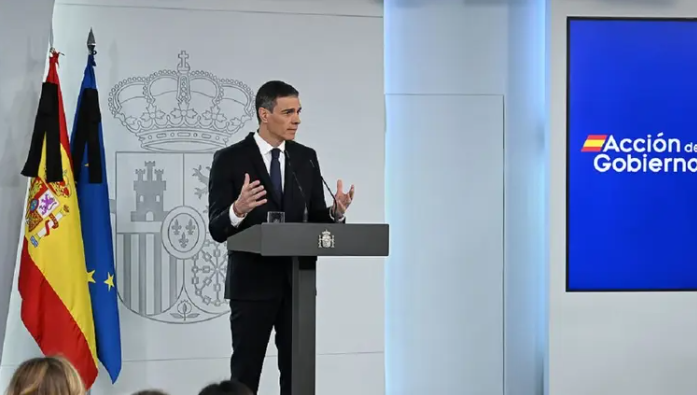
The President of the Spanish Government, Pedro Sánchez - PHOTO/Pool Moncloa-Borja Puig de la Bellacasa

Starting Tuesday morning, Spain enters a new phase in its immigration policy with the implementation of a revised law considered the most far-reaching in a decade

This legislative reform, approved by the Spanish government after months of intense debate, affects the core of the lives of hundreds of thousands of residents in its territory, from asylum seekers to foreign workers and students.

At the heart of the new amendments is the ‘facilitated rooting’ mechanism, which reduces the required residence time from three to just two years, as well as the ‘second chance’ provision, which grants an exceptional period to recover lost residence permits. These measures are intended to make life easier for tens of thousands of people living in an irregular situation, especially those from Morocco and Latin American countries.

golden-visa-spain

Spain's Prime Minister proposes doubling taxes on foreign property buyers – but it would only affect 3%

When political noise takes priority over concrete housing policies, proposals like this tend to surface – in this case, a plan to limit the purchase of residential property in Spain by non-resident, non-EU foreigners. Prime Minister Pedro Sánchez has announced the government’s intention to impose a tax increase of up to 100% of the property’s value. Yet such a drastic measure would only affect about 2.7% of all property transactions in Spain, based on 2024 data from notaries.

In 2024, property sales in Spain reached 698,381, marking a 12.1% rise compared to 2023. This represents a return to growth after a 10.7% dip in 2023, and even exceeds the boom year of 2022, which saw 697,238 transactions. Out of all the homes sold this year, 139,102 were bought by foreigners – a year-on-year increase of 5.9%. While still more moderate than the post-pandemic surges in 2021 (44.2%) and 2022 (28.5%), it is a noticeable improvement from 2023, when foreign purchases dropped by 8.5%.

Breaking down the data, foreign residents in Spain accounted for 58.1% of property purchases by foreigners (80,878 homes), with a 7.9% annual increase – a higher growth rate than that of non-resident foreign buyers, which rose by 3.2%.

Meanwhile, non-resident foreigners purchased 58,224 properties (41.9% of the total bought by foreigners). However, the proposed tax wouldn’t apply to all of them – it would only affect non-EU nationals who don’t reside in Spain.

In fact, non-resident, non-EU foreigners accounted for just 18,800 purchases – around one in three (32.3%) of all non-resident foreign transactions. That’s only 13.5% of total foreign purchases and just 2.7% of all property sales in Spain.

Back To Top